
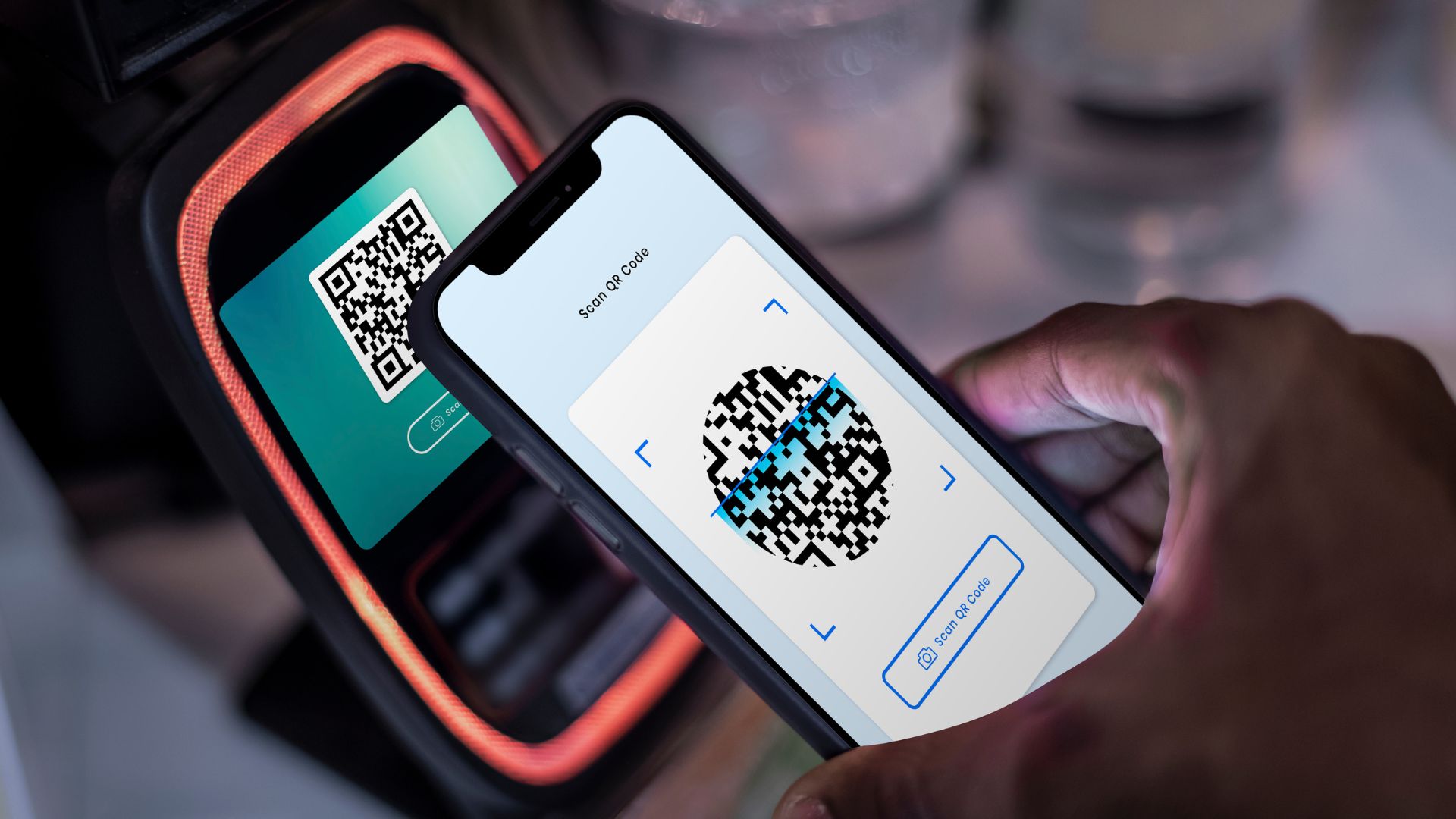







Bank Indonesia and the Bank of Korea officially launched a cross-border QR payment corridor between Indonesia and South Korea on April 1, 2026, enabling users in both countries to transact using domestic payment apps without currency exchange. The launch, tied to a state visit by Indonesian President Prabowo Subianto to Seoul, adds South Korea as the fifth cross-border QRIS corridor, extending Indonesia’s interoperable payment network across a growing set of Asian economies.
Key Facts At A Glance
- Bank Indonesia and the Bank of Korea launched the Indonesia-South Korea QRIS cross-border payment system on April 1, 2026.
- The service was initially available through Woori Card and KB Kookmin Bank, with Shinhan Bank, Woori Bank, Hana Bank, Shinhan Card, KB Kookmin Card, GLN, and Travel Wallet to be added in phases.
- KB Kookmin Bank became the first Korean lender to directly connect with Indonesia’s national QRIS network, enabling payments at more than 32 million merchants in Indonesia.
- Settlement is conducted in local currencies, eliminating double currency conversion from won to US dollars and then to Indonesian rupiah.
- As of February 2026, QRIS had reached 60.77 million users in Indonesia, meeting Bank Indonesia’s 2026 user target.
- Existing QRIS cross-border corridors include Thailand (August 2022), Malaysia (May 2023), Singapore (November 2023), and Japan (August 2025).
- The launch forms part of the Joint Vision Statement signed by Indonesian President Prabowo Subianto and South Korean President Lee Jae-myung during a bilateral summit on April 1, 2026.
- Bank Indonesia projects digital payment transactions in Indonesia to grow 29.7% in 2026.
A Bilateral Launch Tied To State Diplomacy
The Indonesia-South Korea QRIS cross-border payment system went live on April 1, 2026, coinciding with Indonesian President Prabowo Subianto’s state visit to Seoul and the signing of a Joint Vision Statement elevating bilateral ties to a Special Comprehensive Strategic Partnership. Bank Indonesia Governor Perry Warjiyo, speaking at the launch ceremony in Jakarta, described the rollout as a concrete step in expanding digital economic connectivity between the two countries.
The initiative formalizes a process that began with discussions in 2023 and was framed in a memorandum of understanding signed in July 2024 between Bank Indonesia and the Bank of Korea. A high-level meeting between the two central bank governors in February 2026 confirmed the April rollout timeline. The launch was also coordinated with the Indonesian Payment System Association (ASPI) and the Korea Financial Telecommunications and Clearings Institute (KFTC), which provides the technical infrastructure underpinning the Korean side of the connection.
Bank of Korea Deputy Governor Chang Cheong-soo described the system as a milestone in deepening cooperation in digital finance and the broader economy, and committed to further collaboration to strengthen payment system integration between the two countries.
How The System Works
The Korea-Indonesia cross-border QR payment service allows users in both countries to make payments by scanning QR codes through their existing domestic banking or payment apps, without opening new accounts or converting currency through an intermediate. Settlement occurs directly in the local currencies of both countries, removing the standard double conversion chain that typically routes overseas card transactions through US dollars before arriving in the destination currency. Bank Indonesia and the Bank of Korea said this structure is expected to reduce foreign exchange conversion costs and transaction fees for individual users.
On the Korean side, the service launched through Woori Card and KB Kookmin Bank. KB Kookmin Bank, through its KB Star Banking app, connects to more than 32 million QRIS-participating merchants in Indonesia, including destinations in Bali and Jakarta. The bank described itself as the first Korean lender to integrate directly with Indonesia’s national QR network using KFTC’s payment infrastructure. Korean users in Indonesia scan the standard QRIS code displayed at any participating merchant, and the transaction settles in Indonesian rupiah from their Korean won balance without manual conversion.
On the Indonesian side, QRIS users with domestic banking apps can transact at participating Korean merchant terminals. Publicly available sources do not specify the number of Korean merchant locations currently accepting Indonesian QRIS users at launch, and expansion details on the Indonesian outbound side remain limited as of the date of this report.
QRIS As Cross-Border Infrastructure
The South Korea corridor marks the fifth active cross-border QRIS link for Indonesia. The system launched its first international connection with Thailand in August 2022, followed by Malaysia in May 2023, Singapore in November 2023, and Japan in August 2025. Transaction data across these corridors reflects strong inbound demand. In 2025, foreign tourists transacting in Indonesia via QRIS totaled 5.89 million transactions, significantly exceeding the 1.68 million outbound transactions made by Indonesians abroad through the same period.
The Malaysia corridor, launched in May 2023, recorded the highest cumulative volume, with 10.66 million transactions worth Rp2.75 trillion. The Thailand corridor, the oldest active connection, recorded 1.64 million transactions valued at Rp656.27 billion since August 2022. The Japan corridor, launched in August 2025, recorded 5,088 transactions worth Rp428.80 million, reflecting its early stage.
Bank Indonesia Governor Perry Warjiyo has publicly stated that QRIS expansion targets a total of eight countries, with Vietnam, Thailand, Singapore, China, India, and Saudi Arabia cited alongside existing corridors. Bank of Korea officials confirmed plans to expand Korea’s QR-based cross-border payment service to Vietnam, Thailand, Singapore, and India in subsequent phases.
Implications For Regional Payment Connectivity
The Indonesia-South Korea launch reflects a broader pattern in APAC where central banks are treating retail payment interoperability as economic infrastructure rather than a commercial product decision. QR-based cross-border connectivity, when built on local currency settlement frameworks, reduces dependence on correspondent banking networks and US dollar intermediation for small-value transactions.
For Indonesia, the expansion reinforces QRIS as the country’s primary instrument of payment diplomacy. The system now connects 60.77 million domestic users to five international markets, with further corridors planned. For South Korea, the Indonesia link adds a major Southeast Asian market to a QR payment network that already covers Japan, Thailand, Vietnam, and Taiwan through KB Kookmin Bank’s existing cross-border infrastructure.
The bilateral context matters as well. The launch was embedded in a heads-of-state joint statement, signaling that cross-border payment connectivity is increasingly treated as part of formal bilateral economic frameworks rather than a purely technical or commercial arrangement. Bank Indonesia has framed QRIS interoperability as both an innovation initiative and a sovereignty instrument, positioning Indonesia as a co-developer of regional payment infrastructure rather than an adopter of external systems.